THE DREAM
- TASKS
- Environment Design, Game Programming
- Description
The Dream is a 3rd Person Platformer set in a dreamlike Solarpunk World. Play as a Robot with the goal to deliver a sacred Plant to the top of a majestic Mountain. Learn new Abilities as you progress and master all the Challenges on your way to the top.
- Year
- 2025
- Genre
- 3RD PERSON PLATFORMER
- Platform
- PC
- Engine
- Unreal Engine 5
My Contributions
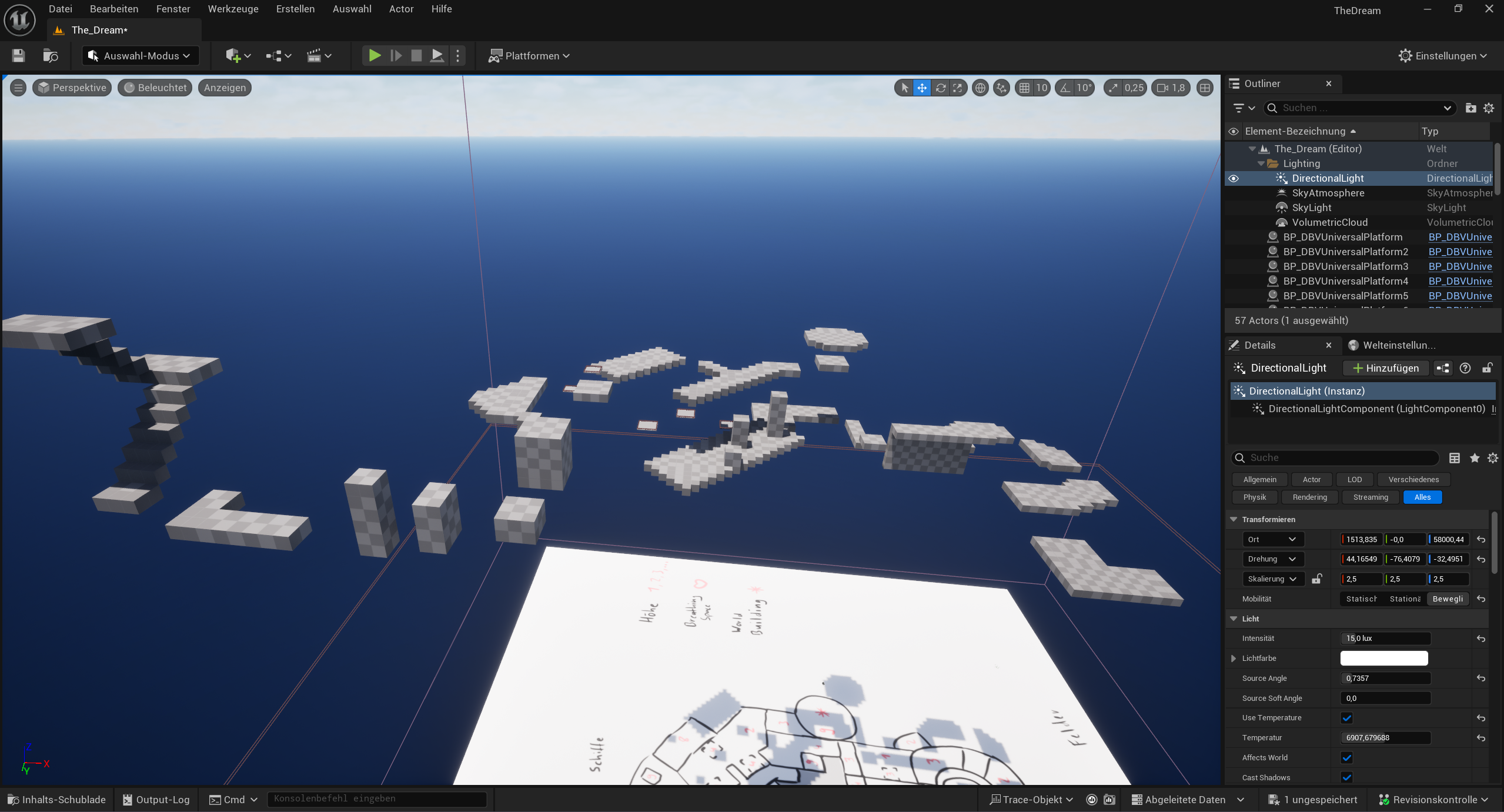
Blockout for Biome 1
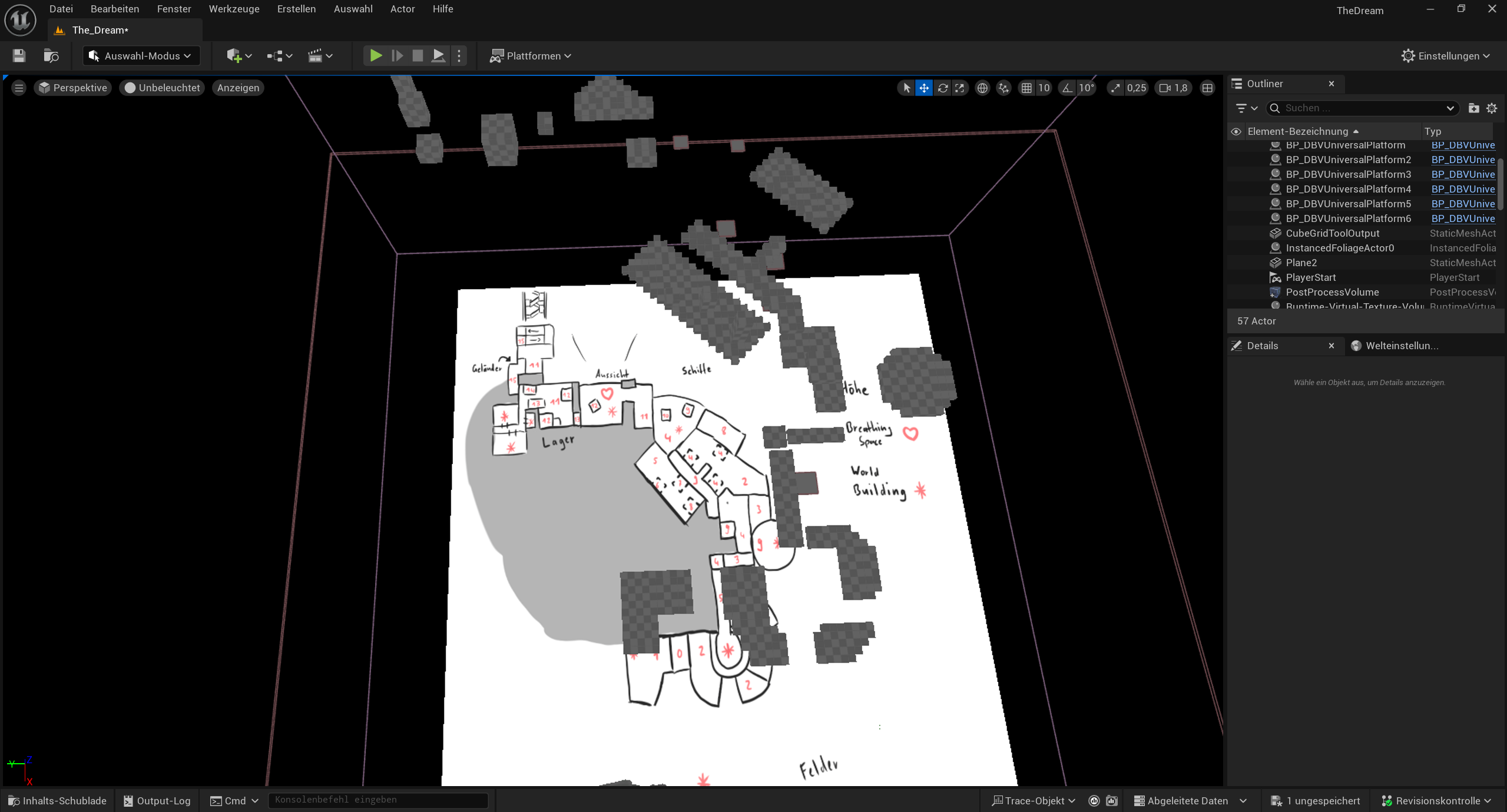
Blockout for Biome 2 and 3
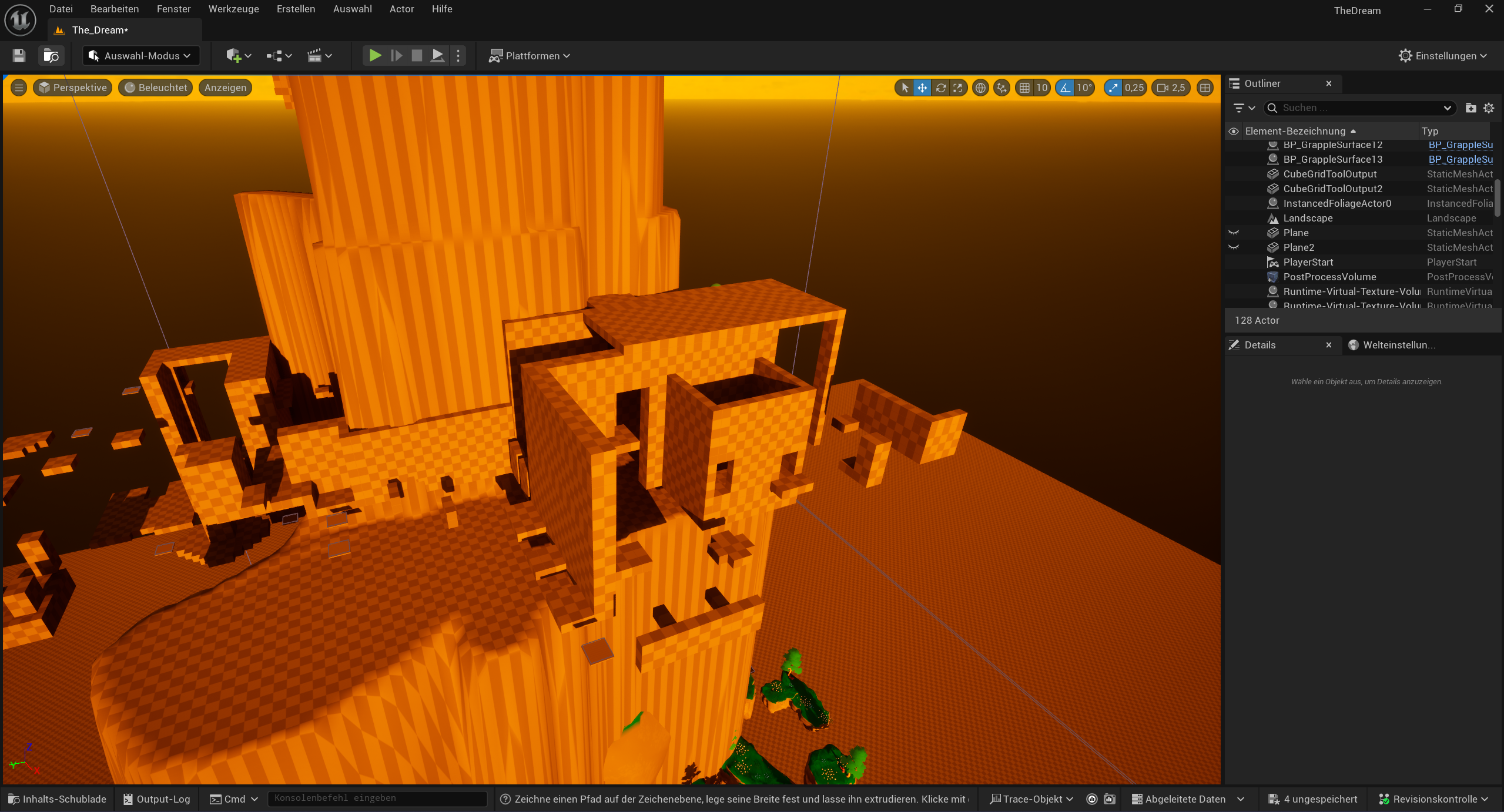
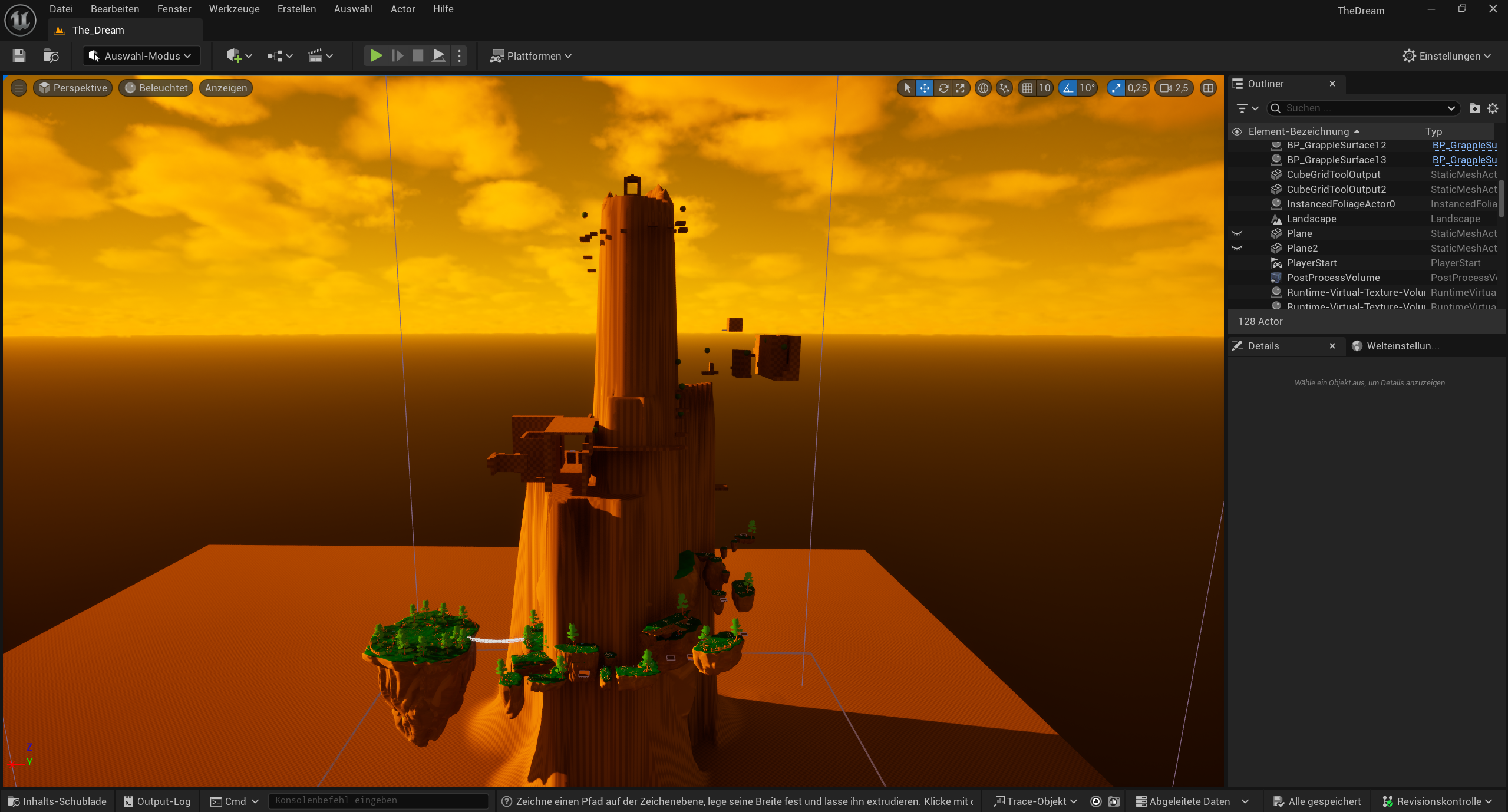
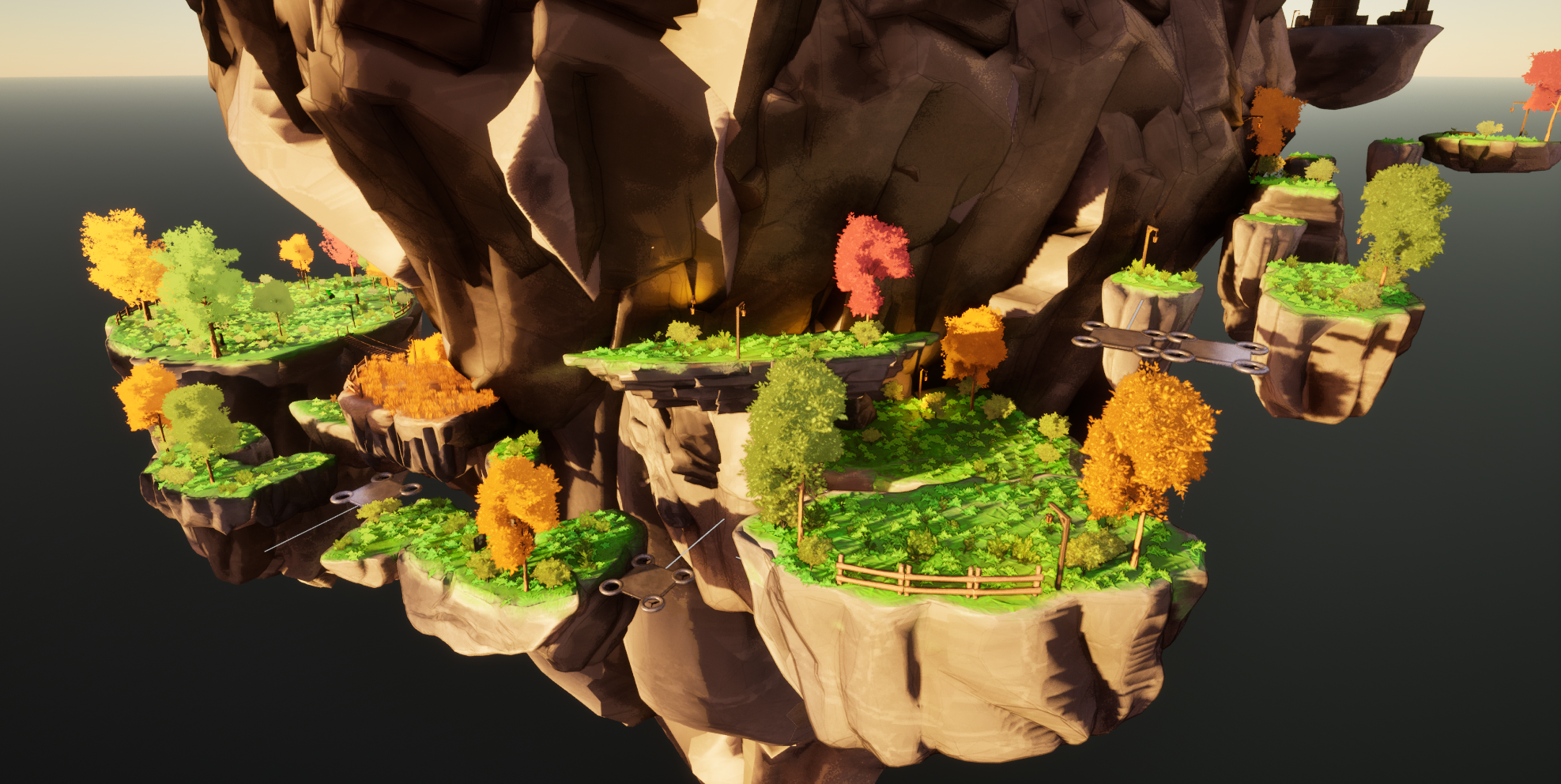
Finished Biome 1

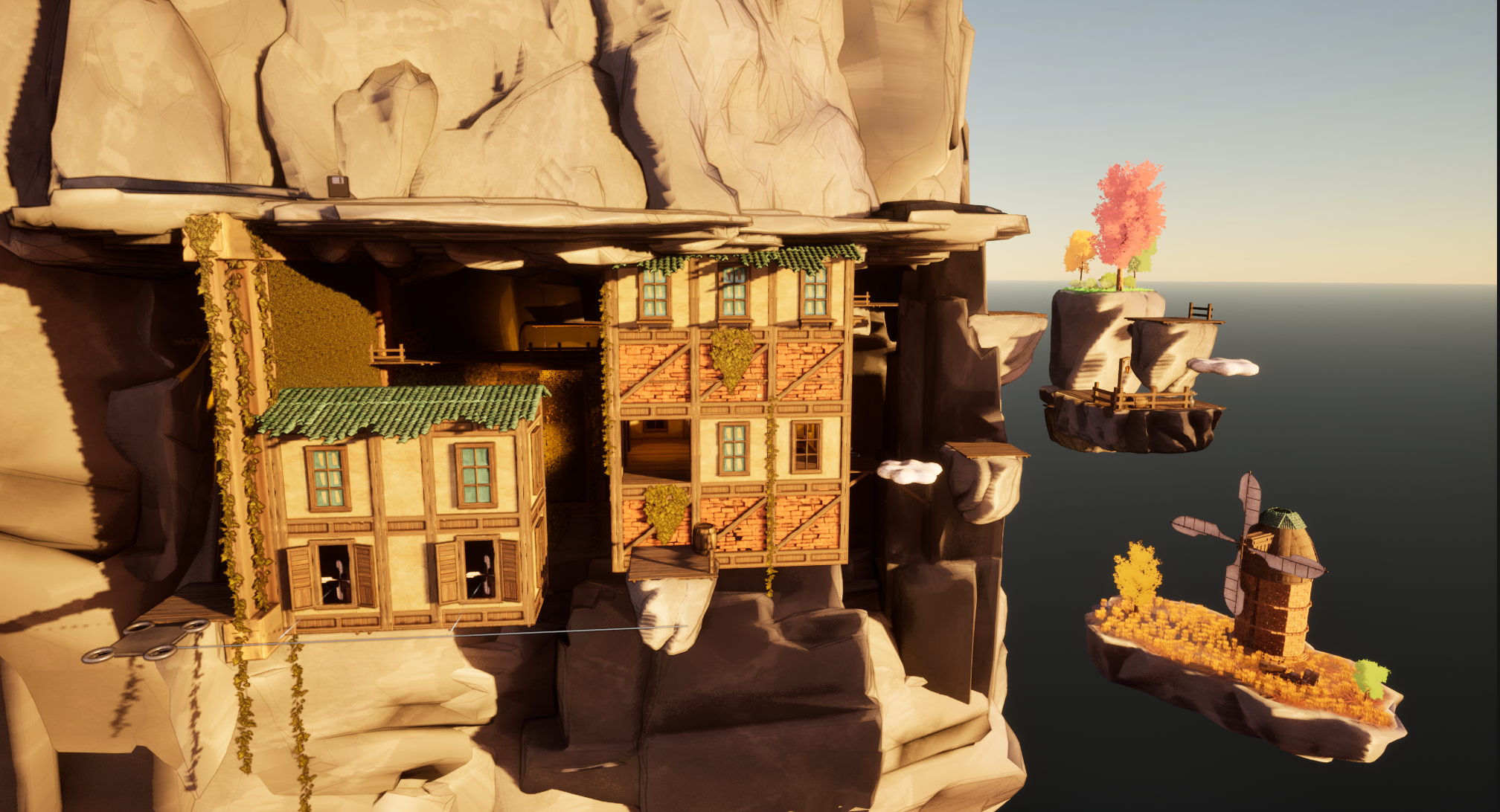
Finished Biome 2

Finished Biome 3
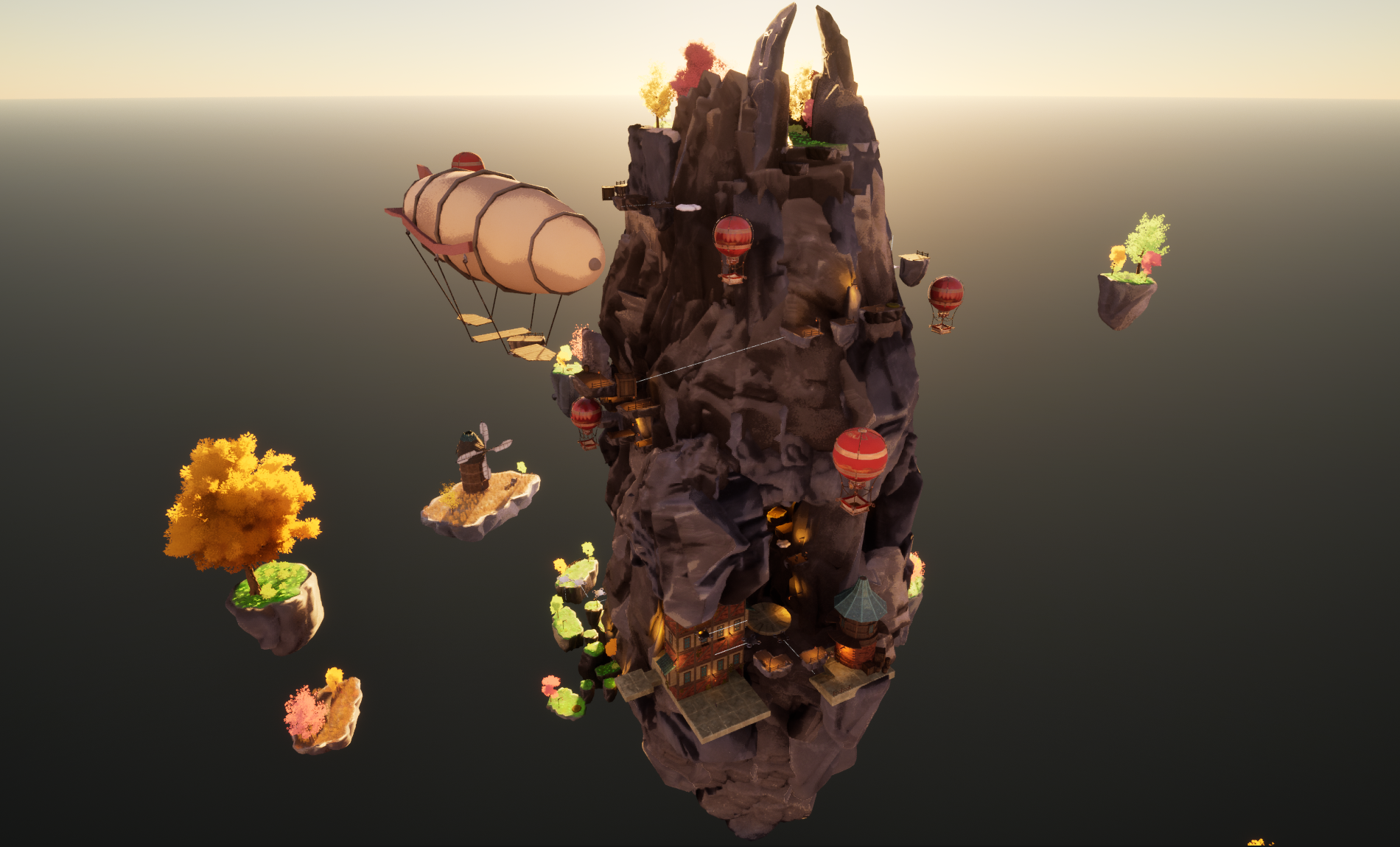
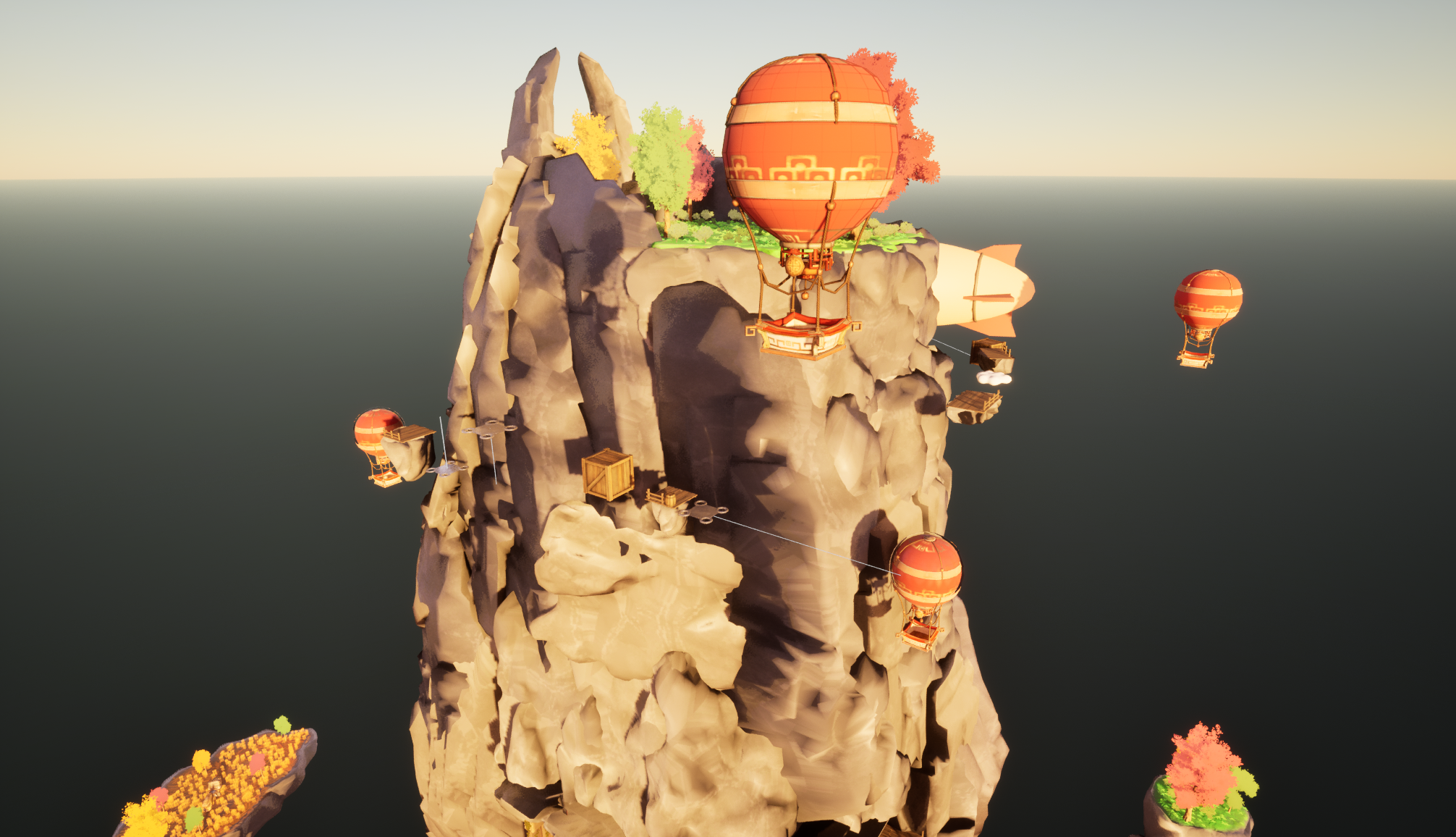
My main focus in this project was the environment design which was based on concept art. The game is supposed to be set in a Solarpunk world, so I had to choose the assets carefully to fit into this category. I received the level design sketches and built the first blockout around them before I started building the environment itself.
The mountain should contain 3 different biomes and be built like its own ecosystem where people could live. The biomes all should be pretty distinct from each other. The first biome is very nature oriented for people like farmers, kind of like a little forest with some wheat fields.
The second biome is this city built into the mountain, where most of the people live and therefore it is dense and a bit claustrophobic.
The last biome is centered around the top of the mountain with those small sky islands and mostly hot air balloons and an airship. Those represent the way to the top. On the peak of the mountain is this little forest with a shrine where the player needs to deliver the plant to save the mountain.
I partly also worked on programming some gameplay mechanics like the grappling hook but my main focus was designing and building the environment.
The highlight of this project was winning the „Best Student Game Award 2025“ for best digital Game Prototype. This was organized by the Affective & Cognitive Institute of Hochschule Offenburg.
What I Learned
- Material & Asset Selection – Selecting assets and materials that support the environment's visual identity
- Reference Gathering – Using visual references to guide environmental design decisions
- Player Flow – Creating a natural progression through the environment without relying on explicit instructions
- Exploration & Discovery – Encouraging players to investigate their surroundings and discover narrative clues
- Blockout & Iteration – Testing spatial layouts before committing to final assets and details
- Spatial Layout – Designing spaces that encourage exploration and support the intended player experience
- Team Collaboration – Working collaboratively towards a shared creative vision
- Feedback & Iteration – Giving and receiving constructive feedback to improve the final result
- Task Coordination – Coordinating tasks and responsibilities to keep the project on track
- Interdisciplinary Collaboration – Collaborating with team members from different creative and technical disciplines
TEAM
Astrid Pittschmann
Concept Art
Character Design
Baran Yerlikaya
3D Character Model
Animations
Maiko Peter
Level Design
User Interface Design
Uzay Luzardo Utkubas
Game Programming
Teaser + Soundtrack
Colin Coveli
Environment Design
Game Programming